
Economic growth, which we are taking for granted, slows for a completely different set of local or global factors and the Modi premium vanishes, observes Debashis Basu.

At a time when the market is betting on a 'higher for longer' global interest rate view, Accenture's (ACN) weak revenue forecast is a negative read-through for the Indian IT firms, according to analysts. The Dublin-based company sees its revenue growth at 2-5 per cent in constant currency (cc) for the financial year 2024 (FY24), below the pre-Covid levels of 5-8 per cent for FY17-20. The weak projection, thus, signals that slower demand is likely to persist this year, and any recovery is unlikely in the near-to-medium term, experts note.

Hotel companies, which have experienced substantial share price gains in the past six months, are not only expected to post robust revenue growth in the seasonally weak July-September quarter (second quarter, or Q2) of 2023-24 (FY24), with the trend continuing in the second half (H2) of FY24, but according to some analysts, they will also benefit from a structural uptrend in progress. To begin with, larger players in the listed hotel sector are expected to report strong growth in Q2 compared to the year-ago quarter. Led by higher demand from the business segment, the sector is expected to achieve a growth rate of 15-30 per cent.

Since its results, the stock of bottling and beverage distribution company Varun Beverages (VBL) is up 7 per cent on the back of a strong 2022-23 January-March quarter performance, robust outlook, and revision in profit estimates. Given the sharp uptick, it is now part of the trillion-rupee club, with its market capitalisation at Rs 1.01 trillion. The stock is one of the best performers in the consumer space as well as the S&P BSE 200, of which it is a constituent.

Acceleration in demand, together with marginal price hikes of about 2-3 per cent by cement companies in the October-December quarter (third quarter, or Q3) of 2022-23, may not be enough to cushion the impact of high input costs on the bottom line, reveal Bloomberg consensus estimates for the quarter. Year-on-year (YoY) net sales growth in Q3 will come in at nearly 7 per cent, shows Bloomberg data, while bottom-line growth will show a sharp decline of 25 per cent from a year ago. The earnings before interest, tax, depreciation, and amortisation (Ebitda) will likely decline by nearly 5 per cent versus a year ago, shows data.

The Nifty IT has been one of the worst-performing indices on the bourses this calendar year. Rising concerns of a potential global recession, which investors fear can dampen demand for export-facing domestic information technology (IT) giants, have sent the index down over 30 per cent on a year-to-date basis. By comparison, the Nifty50 Index has shed 2.8 per cent during the period, reveals data by ACE Equity.

A likely turnaround in profitability margins in the March quarter (Q4FY23) will not be enough to lift the outlook for paint stocks due to volatile crude oil prices and rising competition in the sector, analysts say. Hence, they advise investors to avoid the sector over the short-to-medium term despite the heavy correction in the stocks since last year. Shares of Asian Paints, Berger Paints, Indigo Paints, Nerolac and Pidilite have shed 6-32 per cent over the last 6 months versus a 3 per cent rise in the benchmark Sensex.

Except for Westlife Foodworld (Westlife), a weak 2022-23 (FY23) January-March (fourth quarter, or Q4) quarter performance and a muted near-term outlook led to a downward revision of earnings estimates for quick-service restaurant (QSR) players. Brokerages have slashed estimates by as much as 10 per cent for 2023-24 (FY24) and 2024-25 (FY25). The downward revisions have weighed on the performance of listed players, who have underperformed the market with low single-digit returns over the past month.

Shrinking inflows and surging outflows on account of profit-booking has curtailed mutual fund (MF) investments in equities since April. The total investments made by equity MFs during the first three months of 2023-24 stands at just Rs 2,980 crore, compared with an average monthly investment of Rs 14,500 crore in 2022-23, reveals data from the Securities and Exchange Board of India. "We are seeing signs of moderation in non-systematic investment plan (SIP) contribution, which has impacted domestic fund inflows in recent months to some extent," says Kunal Vora, head-India equity research, BNP Paribas.

The RBI's decision to hike repo rate will hit consumers' buying sentiment, but will have a moderate impact on housing sales in the affordable and mid-income categories, according to industry experts.

ITC's move to demerge the hotel business into a new entity, ITC Hotels Ltd, is a step in the right direction and will allay investor's concerns on the company's capital allocation strategy in the medium-to-long term, said analysts at Morgan Stanley in a note. According to the company, the board of directors has approved in principle the demerger of the hotels business, wherein ITC will hold a 40 per cent stake in the new entity, and the remaining 60 per cent will be held directly by shareholders. The scheme of arrangement shall be placed for approval of the Board at its next meeting to be convened on 14th August 2023.

'Like all long-term bull markets, the Indian stock market will continue to climb the proverbial wall of worry.'

TVS Motor Company, on Wednesday, overtook Hero MotoCorp in terms of market value to become the sixth-largest automobile company on market capitalisation. he former's m-cap now stands at Rs 51,681 crore to the latter's Rs 50,951 crore. Bajaj Auto, with Rs 104,872 crore, is the only two-wheeler manufacturer in the top five. Shares of TVS have rallied 73 per cent this year while shares of Bajaj and Hero have risen only 3 per cent and 10 per cent, respectively. While sales, net profit and market share of TVS are lower than that of Bajaj and Hero, there are multiple triggers for the company.

Striking a different note from its peers, US brokerage Bank of America Securities has maintained that the Reserve Bank will leave rates unchanged next week, recognising growth-focused and capex-driven fiscal expansion, which though poses huge price pressure and interest rate risks later. The RBI's rate setting panel Monetary Policy Committee (MPC) will begin its deliberations next Monday and announce the policy moves on Wednesday (February 9) in the backdrop of a massive spike in bond yields post the Budget. Almost all major central banks are in the process of hiking rates to tame inflation.

The two-wheeler sector has been underperforming its peers on the volumes front for over five quarters now. Even in the March quarter, Bajaj Auto and Hero MotoCorp posted a 17-24 per cent YoY decline in volumes, the sharpest in the listed auto universe. The ongoing impact of frequent price hikes, all-time high fuel prices, and muted rural sentiment has led to the lacklustre showing by two-wheeler makers. What has aggravated the situation for two-wheeler companies, which get almost all their sales from the internal combustion engine or ICE-based units, is the traction for electric two-wheelers (EV).

The correction seen in the stock markets thus far is insufficient and there are significant downside risks, given the way macroeconomic data is shaping up, a Nomura equity strategist said on Thursday. "The markets are trying to look through the current stress we see in the macros. There are potential risks to the market. "Our estimates assume no major impact on growth and earnings. "The market should have been at least 5 per cent lower than it is now.

After new-age tech companies reported better-than-expected June quarter (Q1FY23) results, analysts said it will be a long road to recovery for their respective businesses and the stock prices. Moreover, brokerages differ on whether it is the right time to own these stocks. The common thread, however, that runs across most brokerages is Zomato, where they suggest buying the stock with the one-year target price ranging between Rs 60 - 115, translating into an upside of around 9 - 109 per cent from the current levels. The company's gross order value (GOV) of food delivery jumped 10 per cent quarter-on-quarter (QoQ) and 42 per cent year-on-year (YoY) in Q1, aided largely by growth in volume, and mild growth in average order value (AOV) at 1-2 per cent. The company also broke even on an adjusted Ebitda basis during the quarter.

Indian GDP will grow at 8.5 per cent in 2021-22, and the rate will accelerate further to 9.8 per cent in 2022-23, a foreign brokerage said on Tuesday. The GDP had contracted by 7.3 per cent in the pandemic-hit FY21, and is widely expected to grow at a faster pace due to the base effect in 2021-22. The Reserve Bank of India (RBI) expects a 9.5 per cent growth in 2021-22, and the same to slow down to 7.8 per cent as things normalise.

The Securities and Exchange Board of India (Sebi) is working on a new payment system for the secondary market, which could prevent brokers from accessing their client funds. It will be on the lines of the Application Supported by Blocked Amount (ASBA) process used for subscribing to initial public offerings (IPOs), where funds move out of an investor's bank account only after the trade is confirmed. Sebi chairperson Madhabi Puri Buch on Wednesday said that despite the challenges, the new system would be ready in a few months.

The decline of over 5 per cent in PB Fintech's shares (the parent company of PolicyBazaar) in the past two days presents an opportunity for long-term investors to consider buying the stock, suggest analysts. By comparison, the benchmark S&P BSE Sensex has remained flat during the same period with a negligible gain of 40 points, or 0.06 per cent. Analysts believe that the recent selling is "overdone", as the company behind the online insurance portal remains committed to achieving profitability, and the potential threat from the government's online insurance portal, Bima Sugam, might be embellished.

It is important to have the necessary documents on hand to verify the information in the form.

Despite a firm improvement in the operational metrics of new-age companies during the January-March quarter (Q4FY23), analysts remain cautiously optimistic about their outlook. This is because the shares of these firms are still not risk free, as per analysts, given the companies are yet to make profits. Kranthi Bathini, director-equity strategy at WealthMills Securities says that while the sentiment around these stocks, which includes Paytm and Zomato, has turned positive, it remains to be seen how soon these firms turn profitable and improve margins.

American brokerage BofA Securities on Friday said the Indian economy continues to be "weak", pointing to activity indicators tracked by it. On the positive side, the brokerage said credit demand is bottoming out and the real lending rates adjusted for wholesale price inflation are falling. It can be noted that there has been a slew of reports lately about a stronger recovery being underway after the jolt caused by the pandemic.

'IT companies do not have a large presence there either in terms of market and team. So, the impact of the war will be minimal. But West Asia is an emerging economy.'

'I'm pitching India for the strengths we offer, including the English language, engineers, doctors, nurses, professionals, innovative talent of startups.'

On an overall basis, Nomura believes the economic conditions are suited for equity markets. The brokerage is predicting the market performance will be better in the first half of 2020 and "somewhat weaker" in the second half.

The Securities and Exchange Board of India (Sebi) has proposed measures mandating daily upstreaming of all investor funds from stockbrokers to clearing corporations (CCs). The step, aimed at reducing risk on client funds, will further deplete brokers' revenues as they will lose interest income with transfers being done daily. At present, stockbrokers convert the surplus funds into bank guarantees (BG) or fixed deposit (FD) receipts which earns them extra income.

The IPO-bound national insurer LIC is not only the largest holder of government debt -- owning 19 per cent of the G-secs -- but also the single largest owner of equities, the largest fund manger as well as holder of household savings, dwarfing even SBI deposits, as per a report. Holding 17 per cent of the over Rs 80.7 lakh crore dated government securities, maturing by 2061, the Reserve Bank is the second largest holder of government debt, while led by public sector banks, commercial banks collectively own around 40 percent. Other insurers cumulatively own only 5 per cent.

India's equity markets are on a roller-coaster ride, after delivering spectacular returns for two consecutive years - in 2020 and 2021. The benchmark National Stock Exchange's (NSE's) Nifty50 is down 1.5 per cent in the first nine months of the current calendar year 2022 (CY22) as foreign portfolio investors sold Indian stocks due to rising bond yields in the US and across global markets, including India. The sell-off in the Indian equity markets has, however, not been broad-based and largely limited to sectors facing earnings headwinds from rising interest rates, lower commodity and energy prices, and likely economic recession in advanced economies.

Street gave a thumbs down to Aditya Birla Fashion and Retail (ABFRL)-TCNS Clothing deal as analysts flagged near-term profitability risks for ABFRL with its latest acquisition. At the bourses, shares of the Aditya Birla group company tumbled 6.2 per cent in the intra-day trade, before settling 3.27 per cent lower at R 207.2. Those of TCNS, meanwhile, plunged 20 per cent to end at Rs 416.64.

As temperatures soar across the country, amid searing heat wave, analysts see power demand hitting fresh record highs this year. The time, therefore, may be opportune to add related stocks on dips as higher demand boosts earnings visibility, they said. On April 18, India's electricity demand touched a new high of 216 gigawatts.
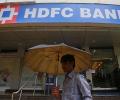
While HDFC Bank has vowed to recoup its lost market share in the credit card segment in three to four quarters by aggressively sourcing new cards, brokerages believe it is a little hard to come by, given how competitive the landscape has become, with other players in the market becoming equally aggressive to gain market share. Kotak Institutional Equities in its report on Monday said, "We would like to believe that the recovery in market share is likely to be gradual, if any. "All the key players, including Axis Bank, are now willing to expand their credit card portfolios as they have tested quite well against Covid-19."

This sort of property is better suited for an investor rather than an end user.

The government is mulling changes in the income tax laws to bring cryptocurrencies under the tax net, with some changes that could form part of the Budget next year, a top official said. Revenue secretary Tarun Bajaj said that in terms of income tax, some people are already paying capital gains tax on the income from cryptocurrency, and in respect of Goods and Services Tax (GST) also the law is "very clear" that the rate would be applicable as those in case of other services.

Because they have become too big and pervasive and the time to regulate is long gone, points out Debashis Basu.

Rakesh Jhunjhunwala-backed Nazara Technologies is all set to hit the primary market with its Rs 583-crore IPO on Wednesday. The diversified and online gaming firm's three-day issue will run through March 17-19 and will be entirely an offer for sale (OFS). While 5.29 million equity shares will be offloaded via OFS by some of the shareholders, Rakesh Jhunjhunwala, who owns 3.29 million shares or 11.51 per cent stake in the company as of September 30, 2020, has decided to hold on to his stake. The issue has a price band of Rs 1,100-1,101 and will be available in lots of 13 shares and multiples thereof.

The Apple iPhone comprises 44 per cent of the global smartphone market's revenues and it is the second most-such device to be shipped after Samsung. More than half of smartphones used in the US are iPhones. More than 7 million iPhones are expected to be sold in India in 2022, extending the user base to 20 million, according to market research and analyst firm Techarc. Hence, the news about Apple scaling down its production target for iPhone 14 in India has made news.

The Reserve Bank will go for a "dovish pause" at Wednesday's policy review announcement amid developments such as a rise in inflation, government maintaining the inflation target band and a likely impact on growth due to local lockdowns on rising COVID-19 infections, analysts said on Monday. Economists at American brokerage Bofa Securities said price stability, growth and financial stability will become the prime focus areas for the central bank going forward. "The RBI MPC (Monetary Policy Committee) should deliver another dovish pause on Wednesday," it said. The policy announcement, the first for the fiscal, will come days after the government maintained the RBI's target to ensure inflation to be within 2-6 per cent band for five more years.

Economic growth has slipped to a six-year low of 5 per cent for the June quarter and is expected to turn in lower than that in the September quarter. Lack of consumption is seen as one of the key factors pulling down growth.

Arguing that the recent elevation in retail inflation is not structural but supply-driven and therefore potentially transitory, a foreign brokerage report has forecast that the benign interest rate regime will continue at least until next June. The assessment comes a day ahead of the third bimonthly monetary policy review on Friday wherein it's widely expected that the monetary authority will leave the key rates unchanged at 4 per cent even though the consumer prices have been on remaining above 6 per cent since May and crude prices have been north of $70 a barrel for months.
